A cuisine built on preservation — salting, drying, smoking, fermenting — that has spent twenty years rediscovering itself. Plus the social rules nobody writes down.
What Norwegians actually eat
Everyday Norwegian food is plainer than the restaurant scene suggests. Breakfast and lunch are usually smørbrød — open sandwiches on dense bread with cheese, cured meat, mackerel in tomato or liver pâté. Dinner is early, often before 18:00, and frequently fish. The big traditional meals cluster around Christmas and Easter.
What has changed is the top and middle of the market. Since the mid-2000s Norwegian kitchens have stopped apologising for their own larder and started building on it: Arctic char, king crab, scallops hand-dived off Trøndelag, reindeer, mutton, root vegetables, birch, spruce shoots, cloudberries and sea buckthorn.
Fifteen things worth ordering
Skrei — migratory Arctic cod, in season January to April. The single best seasonal ingredient in the country.
Tørrfisk / stockfish — unsalted cod air-dried on racks in Lofoten since the Viking age.
Klippfisk — salted and dried cod, the foundation of Ålesund and Kristiansund's wealth.
Brunost — caramelised brown whey cheese, sliced thin with a ostehøvel. Try the Undredal goat version.
Rakfisk — fermented trout from the interior valleys. Divisive. Worth trying once.
Fårikål — mutton and cabbage, the official national dish, eaten in autumn.
Reinsdyrsteik — reindeer, usually with lingonberry and root purée.
Kongekrabbe — Barents Sea king crab, best in Kirkenes and Tromsø.
Reker — cold-water shrimp, bought by the kilo off a boat in Bergen or Oslo and eaten on the quay.
Skillingsbolle — the enormous Bergen cinnamon bun, about NOK 50 and effectively a meal.
Lefse and svele — soft flatbreads and thick pancakes, often served on ferries.
Multer — cloudberries, late summer, expensive and worth it.
Pinnekjøtt — salted, dried and steamed lamb ribs, the Christmas dish of the west.
Aquavit — caraway spirit; Linie is shipped across the equator and back in oak.
Filter coffee — Norwegians drink among the most coffee per head on earth, and it is usually excellent.
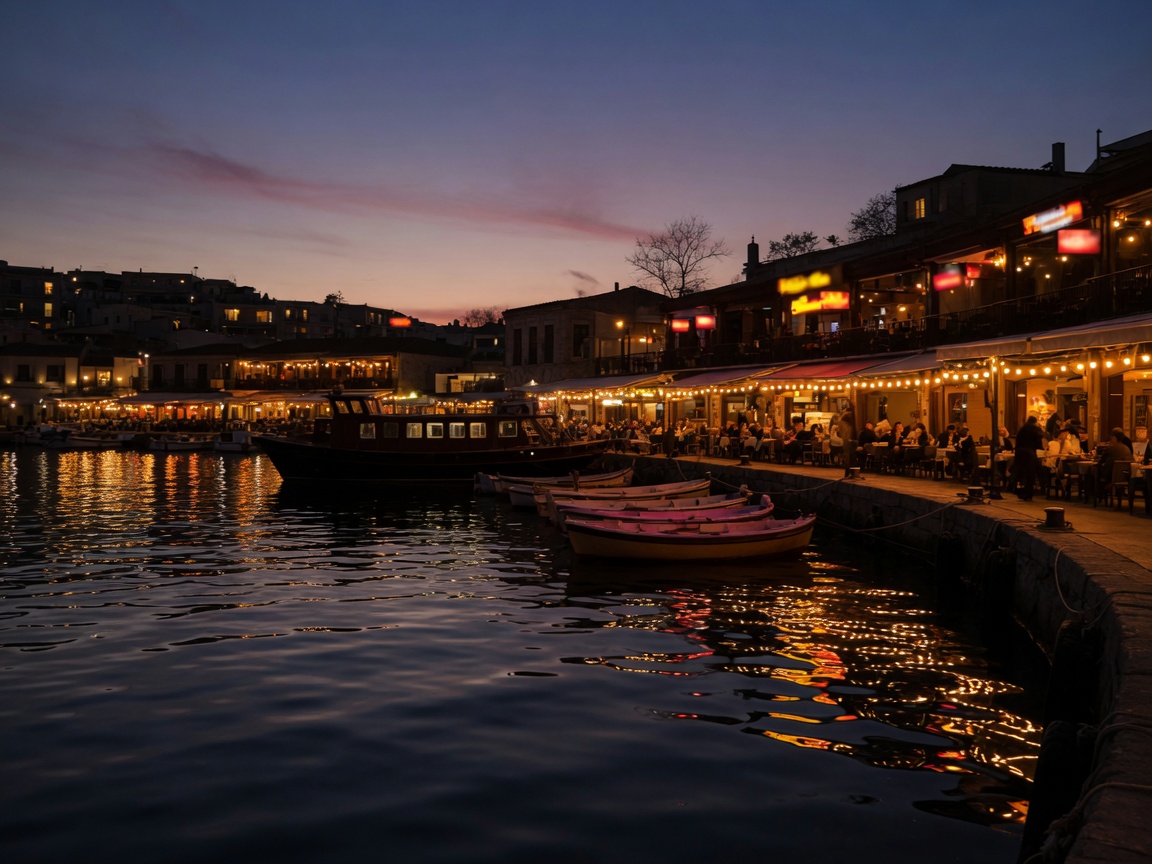
The Bergen waterfront — where most visitors have their first and most expensive Norwegian meal.
What it costs, and how to spend less
Item
Typical price
Budget alternative
Restaurant main course
NOK 280–450
The same kitchen's lunch menu, NOK 160–240
Tasting menu
NOK 900–1,800
Food hall counters, NOK 150–250 a plate
Beer, 0.5 l, bar
NOK 95–130
Supermarket, NOK 30–40
Coffee
NOK 40–55
Free refills at many petrol stations
Bakery sandwich
NOK 80–120
Supermarket lunch, NOK 50–70
Hot dog at a kiosk
NOK 45–60
The national emergency meal
The three tactics that genuinely work: eat your main meal at lunch, buy breakfast and lunch at Rema 1000, Kiwi or Coop Extra, and use the food halls — Mathallen in Oslo, Mathallen Bergen, Fisketorget — where the produce is restaurant grade at counter prices.
Alcohol rules
Beer up to 4.7% is sold in supermarkets until 20:00 on weekdays and 18:00 on Saturdays, and not at all on Sundays or public holidays. Everything stronger comes from Vinmonopolet, the state monopoly, which keeps shorter hours still and closes early on Saturdays. Bars serve later, at a price. The drink-driving limit is 0.02%, which in practice means none.
Social rules nobody writes down
Tipping is optional. Service is included and staff are properly paid. Rounding up or 5–10% for a good sit-down meal is generous, not expected.
Take your shoes off when entering a Norwegian home. Always.
Queue precisely, and take a numbered ticket where a dispenser exists — bakeries, pharmacies, post offices.
Personal space is larger here. An empty seat between strangers on a bus is normal, not rude.
Sunday is quiet. Most shops are closed; petrol stations and small Bunnpris outlets are the exception.
Small talk is brief and sincere. Once a conversation starts, though, Norwegians are direct and generous with practical help.
Punctuality matters — for tours, ferries and dinner invitations alike.
Allemannsretten — the right to roam
Codified in 1957, the right to roam allows anyone to walk, ski, cycle, swim and camp on uncultivated land, including private property. The obligations are equally clear: pitch at least 150 metres from any inhabited house, stay no more than two nights in one spot without asking, light no fires in or near woodland between 15 April and 15 September, leave gates as you found them, and carry out everything you carried in. It applies to tents, not to campervans. More on this in the hiking guide.
The best meal we have eaten in Norway cost NOK 190: shrimp off a boat, bread from a bakery, and a bench on the quay at Bryggen. The second best cost NOK 1,600.
Language
English is spoken almost universally and very well, and nobody will expect you to attempt Norwegian. A few words are still appreciated: takk (thanks), hei (hi), ha det (bye), unnskyld (excuse me), skål (cheers). Note that there are two written standards, Bokmål and Nynorsk, and that Sámi languages are official in parts of the north.
FAQ
Is the tap water safe?
Yes, and it is among the best in the world. Never buy bottled water in Norway; fill up everywhere, including at most trailheads.
Are vegetarians catered for?
In cities, comfortably. In small fjord and island villages the choice narrows to one dish, so check menus ahead if you are travelling rurally.
Can I bring alcohol into the country?
Yes, within the duty-free quota, and many Norwegians do exactly that. It is a legitimate way to cut a trip's cost significantly.
What is the deposit on bottles?
NOK 2–3 per container, refunded at machines inside supermarkets. It is added to the shelf price, so return your empties.
ContinueRelated
Destination
Bergen
Shellfish, skillingsboller and the fish market worth using.